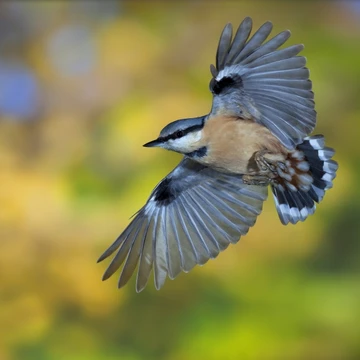
Albatross
Large seabirds of the Southern Ocean and North Pacific.

Albatrosses, of the biological family Diomedeidae, are large seabirds related to procellariids, storm petrels, and diving petrels in the order Procellariiformes (the tubenoses). They range widely in the Southern Ocean and the North Pacific, depending on cold water currents for foraging and nesting. Great albatrosses are among the largest of flying birds, with wingspans up to 2.5–3.5 metres and bodies over 1 metre in length. They are highly efficient in the air, using dynamic soaring and slope soaring to cover great distances with little exertion.
- family
- Diomedeidae
- order
- Procellariiformes
- largest_wingspan
- 2.5–3.5 metres (8.2–11.5 ft)
- number_of_species
- 21 (commonly accepted, with dispute)
- primary_threat
- Longline fishing
Lore & Background
Albatrosses are colonial, nesting on remote oceanic islands, often with several species nesting together. Pair bonds form over several years through ritualised dances and last for life. A breeding season can take over a year from laying to fledging, with a single egg laid per attempt. The name 'Albatross' derives from the Arabic al-qādūs or al-ḡaṭṭās, via Portuguese Alcatraz, and was perhaps influenced by Latin albus ('white'). They were once commonly known as goonie birds or gooney birds in the North Pacific, and as mollymawk in the Southern Hemisphere. The genus name Diomedea references the mythical metamorphosis of the companions of the Greek warrior Diomedes into birds. Taxonomy of albatrosses has been debated for over 100 years. They are usually regarded as falling into four genera: great albatrosses (Diomedea), mollymawks (Thalassarche), North Pacific albatrosses (Phoebastria), and sooty albatrosses (Phoebetria). The number of species is disputed, with 21 most commonly accepted. The earliest fossil albatrosses are from Eocene to Oligocene rocks.
Reader's Guide
Albatrosses hold significance as iconic seabirds of the Southern Ocean and North Pacific, noted for their extreme size, efficient flight, and long lifespans. Of the 22 species recognised by the IUCN, 21 are listed at some level of concern: two Critically Endangered, seven Endangered, six Vulnerable, and six Near Threatened. Populations declined historically due to feather harvesting, and modern threats include introduced species (rats, feral cats), pollution, overfishing, and especially longline fishing, where birds are hooked and drown. Stakeholders including governments, conservation organisations, and the fishing industry work to reduce this phenomenon. The group depends on cold water currents; the genus Phoebastria exploits the California, Alaska, Oyashio, and Humboldt currents. Their taxonomy remains unsettled, with ongoing debate over species numbers and genera, reflecting the complexity of their evolutionary history.
Did You Know?
- Albatrosses are absent from the North Atlantic, though fossil remains of short-tailed albatross show they lived there up to the Pleistocene.
- The name 'Albatross' derives from the Arabic al-qādūs or al-ḡaṭṭās, via Portuguese Alcatraz.
- Longline fisheries pose the greatest threat to albatrosses, as birds become hooked on bait and drown.
Frequently Asked Questions
What is an albatross?
Albatrosses are large marine birds in the family Diomedeidae, part of the tubenose order Procellariiformes alongside storm petrels, diving petrels, and procellariids. They are found in cold-water zones of the Southern Ocean and the North Pacific.
How big can an albatross get?
Great albatrosses rank among the largest flying birds on Earth, with wingspans stretching from 2.5 to 3.5 metres and bodies longer than one metre.
How do albatrosses fly for so long without tiring?
They exploit wind gradients over open water and updrafts off terrain to soar for hundreds of kilometres with very little muscular effort, a technique known as dynamic and slope soaring.
Where do albatrosses live and breed?
Their distribution follows cold-water currents across the Southern Ocean and the North Pacific, where they both forage and nest.
What is the biggest threat to albatross populations?
Longline fishing gear is the leading cause of albatross mortality, since the large birds are easily lured to baited hooks at sea and become entangled.
More in Birds 1-24
Elsewhere in the Birds universe
Spotted an error? Know more?
This is a living reference — every entry is fact-audited, and reader corrections feed straight into our audit queue. Suggest an edit · See this site's audit record