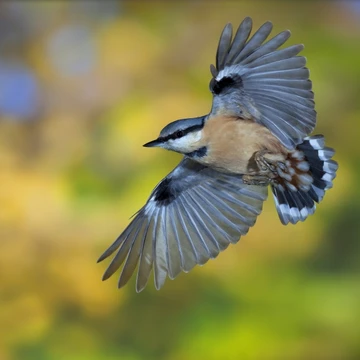
Bulbul
Medium-sized passerine songbirds found across Africa and Asia.

Bulbuls are members of the family Pycnonotidae, a group of medium-sized passerine songbirds that also includes greenbuls, brownbuls, leafloves, and bristlebills. African species are predominantly found in rainforest, while Asian bulbuls are more common in open areas.
- family
- Pycnonotidae
- number_of_genera
- 28
- distribution
- Africa, Middle East, tropical Asia to Indonesia, Japan, Indian Ocean islands
- size_range
- 13 cm and 13.3 g to 29 cm and 93 g
- diet
- Fruit, seeds, nectar, insects, arthropods, small vertebrates
Lore & Background
The Persian word 'bulbul' sometimes refers to the nightingale, but in English it denotes the birds discussed here. Several species once placed in Pycnonotidae have been moved to other families: Malagasy species formerly in Phyllastrephus now belong to Bernieridae, and the genus Nicator is now in Nicatoridae. A 2007 study using three nuclear markers found the genus Andropadus non-monophyletic, leading to species being moved to resurrected genera Arizelocichla, Stelgidillas, and Eurillas, with only the sombre greenbul retained in Andropadus.
Reader's Guide
Bulbuls are short-necked, slender passerines with long tails and short, rounded wings. Their bills are slightly elongated and hooked. Plumage varies from colorful (yellow, red, or orange vents, cheeks, or throats) to drab olive-brown or black; some have distinct crests. They are highly vocal, with calls often described as nasal or gravelly. Most species are monogamous, though the yellow-whiskered greenbul may be polygamous with a lekking system. Some species exhibit alloparenting, where non-breeders help raise young. Nests are open tree structures, with up to five speckled eggs incubated by the female for 11–14 days; chicks fledge after 12–16 days. Bulbuls eat fruit, seeds, nectar, insects, arthropods, and small vertebrates; most are frugivorous, with some specialists, especially in Africa. Open-country species are generalists. Some species join mixed-species feeding flocks. Red-whiskered and red-vented bulbuls have been widely introduced to areas like southern Florida, Fiji, Australia, and Hawaii via the pet trade. Some are crop pests in orchards. Most bulbuls tolerate human disturbance, but about 13 species, mostly specialized forest species, are threatened by habitat loss.
Did You Know?
- A 2007 study found the genus Andropadus non-monophyletic, leading to species being moved to three resurrected genera.
- The Persian word 'bulbul' sometimes refers to the nightingale, not the bird discussed here.
- Red-whiskered and red-vented bulbuls have been introduced to southern Florida, Fiji, Australia, and Hawaii.
Frequently Asked Questions
What is a bulbul?
A bulbul is a medium-sized passerine songbird that belongs to the family Pycnonotidae, which also groups together greenbuls, brownbuls, leafloves, and bristlebills. They are a widespread group found across Africa, the Middle East, tropical Asia, and the Indian Ocean islands.
Where do bulbuls live and what habitats do they prefer?
African species tend to stick to rainforest environments, whereas Asian bulbuls show a stronger preference for open areas. Their overall range spans from Africa through the Middle East and tropical Asia, reaching as far as Japan, Indonesia, and scattered Indian Ocean islands.
What do bulbuls eat?
Bulbuls are generalist feeders that take fruit, seeds, and nectar alongside insects, arthropods, and even small vertebrates. This flexible diet helps them succeed in both dense forest and more open settings.
How big are bulbuls?
Across the family, individuals range from roughly 13 cm in length and 13.3 g in mass at the small end up to about 29 cm and 93 g at the large end. They sit comfortably in the medium-sized tier of passerine songbirds.
How many genera are in the bulbul family?
Pycnonotidae contains 28 genera in total. This count covers not only the classic bulbuls but also the closely related greenbuls, brownbuls, leafloves, and bristlebills.
More in Birds 1-24
Elsewhere in the Birds universe
Spotted an error? Know more?
This is a living reference — every entry is fact-audited, and reader corrections feed straight into our audit queue. Suggest an edit · See this site's audit record