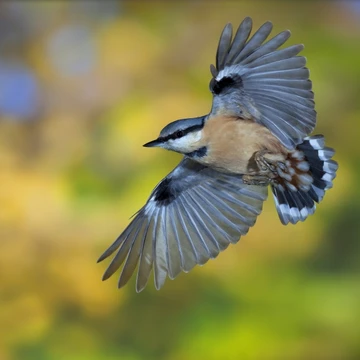
Goose
Waterfowl of the Anatidae family, known for V-formation flight.
A goose (plural: geese) is a type of waterfowl belonging to the family Anatidae. This group includes two main genera: *Anser*, which covers grey and white geese, and *Branta*, which covers black geese. Some birds commonly called geese, like the Egyptian goose and Orinoco goose, are part of the Tadorninae subfamily and are not considered "true geese" in a taxonomic sense. More distant relatives in the Anatidae family include swans, which are generally larger than true geese, and ducks, which are smaller. The word "goose" can refer to a bird of either sex, but when contrasted with "gander," it specifically means a female; a gander is a male. Young geese that have not yet fledged are called goslings. On the ground, a group of geese is known as a gaggle; in flight, they are called a skein, a team, or a wedge; when flying very close together, they are referred to as a plump.
The word "goose" comes directly from the Proto-Indo-European root *ǵʰh₂éns. In Germanic languages, this root evolved into Old English *gōs* (plural *gēs*) and *gandra*, which became modern English *goose*, *geese*, and *gander*. Related forms appear in West Frisian (*goes*, *gies*, *guoske*), Dutch (*gans*, *ganzen*, *ganzerik*), New High German (*Gans*, *Gänse*, *Ganter*), and Old Norse (*gás*, *gæslingr*, the source of English *gosling*). The same root also gave rise to Lithuanian *žąsìs*, Irish *gé* (from Old Irish *géiss*), Sanskrit *haṃsa*, Assamese *hãh*, Latin *anser*, Spanish and Portuguese *ganso*, Ancient Greek *khēn*, Albanian *gatë* (meaning swans), Finnish *hanhi*, Avestan *zāō*, Polish *gęś*, Romanian *gâscă* / *gânsac*, Ukrainian *huska* / *husak*, Russian *gusyna* / *gus*, Czech *husa*, and Persian *ghāz*.
The two living genera of true geese are *Anser* (grey and white geese, such as the greylag goose and snow goose) and *Branta* (black geese, such as the Canada goose). Two other genera are only tentatively placed within the Anserinae subfamily: *Cereopsis* (the Cape Barren goose) and *Cnemiornis* (the prehistoric New Zealand goose). These may belong to the shelducks or form their own subfamily. Either these, or more likely the goose-like coscoroba swan, are the closest living relatives of true geese. Fossils of true geese are difficult to assign to a specific genus, but the fossil record—especially in North America—is dense and shows many different species of true geese dating back about 10 million years to the Miocene. The aptly named *Anser atavus* (meaning "progenitor goose"), from around 12 million years ago, had even more primitive features in common with swans. Additionally, some goose-like birds are known from subfossil remains found on the Hawaiian Islands. Geese are monogamous and stay in permanent pairs year-round, but unlike most other permanently monogamous animals, they are territorial only during the brief nesting season. Paired geese are more dominant and feed more, which leads to more offspring.
Goose fossils have been found from 10 to 12 million years ago (Middle Miocene). *Garganornis ballmanni*, from the Late Miocene (about 6 to 9 million years ago) of the Gargano region in central Italy, stood one and a half meters tall and weighed about 22 kilograms. Evidence suggests this bird was flightless, unlike modern geese.
Most goose species are migratory, though Canada geese living near human developments may stay in one area year-round. These "resident" geese, found mainly in the eastern United States, may migrate only short distances or not at all if they have enough food and access to open water.
Migratory geese may use several environmental cues to time the start of their migration, including temperature, predation threat, and food availability. Like all migratory birds, geese can navigate using an internal compass, relying on a mix of innate and learned behaviors. The preferred direction of migration is inherited, and birds appear to orient themselves using Earth's magnetic field. Migrations take place over several weeks, and up to 85% of migration time is spent at perennial stopover sites, where birds rest and build up fat stores for further travel.
Geese fly in a V formation, which helps conserve energy, aids communication, and allows flock members to monitor each other. Studies using great white pelicans showed that flying in a V formation improves the aerodynamics of trailing birds, requiring fewer wing flaps to stay aloft and lowering their heart rates. Leading geese switch positions on longer flights so that multiple individuals can benefit from the less energy-intensive trailing positions; in family groups, parental birds almost always lead.
Some mainly Southern Hemisphere birds are called "geese," most of which belong to the shelduck subfamily Tadorninae. These include the Orinoco goose (*Neochen jubata*), the Egyptian goose (*Alopochen aegyptiaca*), the South American sheldgeese in the genus *Chloephaga*, and the prehistoric Malagasy sheldgoose (*Centrornis majori*). Others include the spur-winged goose (*Plectropterus gambensis*), which is most closely related to shelducks but distinct enough for its own subfamily, the Plectropterinae. The blue-winged goose (*Cyanochen cyanopterus*) and the Cape Barren goose (*Cereopsis novaehollandiae*) have disputed affinities, belonging to separate ancient lineages that may link to the Tadorninae, the Anserinae, or the dabbling ducks (Anatinae). The three species of small waterfowl in the genus *Nettapus* are called "pygmy geese" and seem to represent another ancient lineage, possibly related to the Cape Barren goose or the spur-winged goose. The maned goose, also known as the maned duck or Australian wood duck (*Chenonetta jubata*), and a genus of prehistorically extinct seaducks round out the list.
- Scientific classification
- Family Anatidae, genera Anser and Branta
- Known for
- Migratory V-formation flight, monogamous pairing, cultural sayings
- Fossil record
- 10 to 12 million years ago (Middle Miocene)
- Notable fossil
- Garganornis ballmanni, flightless, 1.5 m tall, ~22 kg
- Migratory behavior
- Most species migratory; some Canada geese remain resident near humans
- Navigation
- Use Earth's magnetic field, temperature, predation threat, and food availability
Lore & Background
Geese are monogamous, living in permanent pairs throughout the year; however, unlike most other permanently monogamous animals, they are territorial only during the short nesting season. Paired geese are more dominant and feed more, two factors that result in more young. Most goose species are migratory, though populations of Canada geese living near human developments may remain in a locality year-round. These 'resident' geese, found primarily in the eastern United States, may migrate only short distances, or not at all, if they have adequate food supply and access to open water. Migratory geese may use several environmental cues in timing the beginning of their migration, including temperature, predation threat, and food availability. Like all migratory birds, geese exhibit an ability to navigate using an internal compass, using a combination of innate and learned behaviors. The preferred direction of migration is heritable, and birds appear to orient themselves using Earth's magnetic field. Migrations occur over the course of several weeks, and up to 85% of migration time is spent at perennial stopover sites, where individuals rest and build up fat stores for further travel. Geese, like other birds, fly in a V formation. This formation helps to conserve energy in flight, and aids in communication and monitoring of flock mates. Using great white pelicans as a model species, researchers showed that flying in a V formation increased the aerodynamics of trailing birds, thus requiring fewer wing flaps to stay aloft and lowering individuals' heartrates. Leading geese switch positions on longer flights to allow for multiple individuals to gain benefits from the less energy-intensive trailing positions; in family groups, parental birds almost always lead.
Reader's Guide
Geese have been a significant part of human culture and language for centuries. The word 'goose' is a direct descendant of Proto-Indo-European *ǵʰh₂éns, with cognates across many Indo-European languages, including Latin anser, Ancient Greek khēn, and Sanskrit haṃsa. This linguistic heritage underscores the bird's long-standing presence in human societies. In popular culture, geese appear in numerous sayings and phrases. 'What's good for the goose is good for the gander' supports equality, often in the context of sex and gender. 'Killing the goose that lays the golden eggs', from Aesop's Fables, warns against greed. 'A wild goose chase' describes a futile effort. The term 'goose egg' can refer to a swelling from an impact injury or the number zero. The oldest collection of Medieval Icelandic laws is known as 'Grágás' (Gray Goose Laws), possibly named because the laws were written with a goose quill, bound in goose skin, or because geese were believed to live longer than other birds. Geese thus hold a unique place in both natural history and human culture, serving as symbols, subjects of folklore, and objects of scientific study.
Did You Know?
- The collective noun for a group of geese on the ground is a gaggle; when in flight, they are called a skein, a team, or a wedge; when flying close together, they are called a plump.
- The fossil Garganornis ballmanni from the Late Miocene of Italy stood one and a half meters tall, weighed about 22 kilograms, and was flightless.
- Geese are monogamous, living in permanent pairs throughout the year, but are territorial only during the short nesting season.
- The oldest collection of Medieval Icelandic laws is known as 'Grágás' (Gray Goose Laws), possibly named because the laws were written with a goose quill.
Frequently Asked Questions
What exactly is a goose?
A goose is a waterfowl in the family Anatidae, restricted taxonomically to the genera Anser (grey and white geese) and Branta (black geese). Some Tadorninae species like the Egyptian goose go by the name colloquially but aren't true geese. The word applies to both sexes, while 'gander' singles out a male.
What are geese most famous for?
Geese are iconic for their V-formation flight during migration and for forming lifelong monogamous pair bonds. They also feature heavily in cultural sayings and folklore across many regions.
How far back do geese appear in the fossil record?
The earliest goose fossils date to roughly 10–12 million years ago in the Middle Miocene. A standout specimen, Garganornis ballmanni, was a flightless giant reaching about 1.5 m in height and weighing near 22 kg.
Do all geese migrate, and how do they find their way?
Most species are migratory, though some Canada geese remain year-round near human settlements. They steer their routes by sensing Earth's magnetic field and by reading temperature shifts, predation pressure, and food availability.
Where do geese sit relative to swans and ducks?
All three belong to Anatidae, but geese occupy the middle size range—smaller than most swans and larger than typical ducks. This size gradient is one of the quickest ways to tell the groups apart in the field.
More in Birds 1-24
Spotted an error? Know more?
This is a living reference — every entry is fact-audited, and reader corrections feed straight into our audit queue. Suggest an edit · See this site's audit record