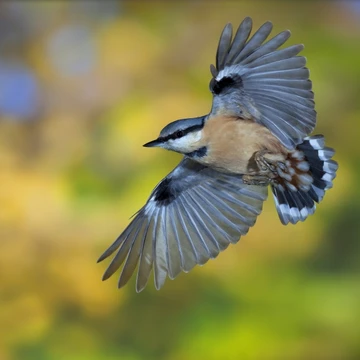
Grouse
Grouse are ground-dwelling birds of the Northern Hemisphere.
Grouse are birds belonging to the order Galliformes and the family Phasianidae, currently classified within the tribe Tetraonini. This grouping, supported by mitochondrial DNA studies, is used by major ornithological authorities. While turkeys are closely related to grouse, they have traditionally been excluded from this tribe, though some modern analyses treat them as basal members of Tetraonini, alongside the koklass pheasant. Grouse are found across temperate and subarctic regions of the Northern Hemisphere, inhabiting environments from arctic tundra and pine forests to moorland and mountainsides. Their range extends from 83°N (the rock ptarmigan in northern Greenland) to 28°N (Attwater's prairie-chicken in Texas), or to 16°30'N if turkeys are included.
The name "grouse" first appeared as "grows" in 1531 and "grewes" in 1547, likely deriving from a postulated singular form, itself from the Late Latin plural *grutas* recorded in 1185, and is probably imitative of the black grouse's calls. Like many galliforms, grouse are compact, heavily-built birds. True grouse range from 31 to 115 cm in length and 0.3 to 6.5 kg in weight; if turkeys are included, wild turkey males can reach 130 cm and 10 kg. Males are significantly larger than females, with the western capercaillie male being up to twice as heavy. Males often have elaborate ornamentation like crests and inflatable skin patches. Many grouse have feathered nostrils, and ptarmigans have fully feathered legs and toes adapted for snow. Unlike most galliforms, they typically lack spurs, except turkeys and the koklass pheasant.
Grouse feed mainly on vegetation, with buds, catkins, leaves, and twigs making up over 95% of adult food by weight. Hatchlings eat mostly insects. Forest species flock only in autumn and winter, while prairie species are more social, and tundra ptarmigans form flocks of up to 300 or more. Most species stay within their breeding range, but rock and willow ptarmigan may migrate hundreds of kilometres, with some crossing the Denmark Strait. Males are polygamous in all but two or three species, with elaborate courtship displays at leks. Red grouse and willow ptarmigan are monogamous. The nest is a ground scrape, and the female lays five to twelve eggs, incubating for 21 to 28 days. Chicks leave the nest immediately and can fly before two weeks old.
- field
- Ornithology
- known_for
- Heavily-built galliform birds with elaborate courtship displays, sexual size dimorphism, and adaptation to cold climates
- habitat
- Temperate and subarctic regions of the Northern Hemisphere
- weight_range
- 0.3 to 6.5 kg (true grouse); up to 10 kg including wild turkeys
Lore & Background
It is probably ultimately of imitative origin, from the calls of the black grouse. Grouse are presently assigned to the tribe Tetraonini, a classification supported by mitochondrial DNA sequence studies and applied by the AviList, International Ornithological Congress, the American Ornithologists' Union, and others. The turkeys are closely allied with grouse, but have traditionally been excluded from Tetraonini; later phylogenomic analyses demonstrated conclusively that they are sister to the traditionally defined grouse, and they, along with the koklass pheasant, may be treated as basal members of the Tetraonini.
Reader's Guide
Grouse are significant as a key component of arctic and subarctic ecosystems, forming a considerable part of the vertebrate biomass. Their numbers may fall sharply in years of bad weather or high predator populations, and they serve as a major food source for lynx, foxes, martens, and some birds of prey. Many species have elaborate courtship displays, including leks, and exhibit pronounced sexual size dimorphism, with males significantly larger than females. The three tundra species have maintained their former numbers, while prairie and forest species have declined greatly because of habitat loss. Most grouse species are listed by the IUCN as 'least concern' or 'near threatened', but the greater and lesser prairie-chicken are listed as 'vulnerable' and the Gunnison grouse as 'endangered'. Some subspecies, such as Attwater's prairie-chicken and the Cantabrian capercaillie, are also in danger. The wild turkey precipitously declined before returning to abundance. Grouse have also benefited from habitat management, particularly popular game birds like the red grouse and ruffed grouse.
Did You Know?
- Grouse range from 83°N (rock ptarmigan in northern Greenland) to 28°N (Attwater's prairie-chicken in Texas), or to 16°30'N when turkeys are included.
- Male grouse can be twice as heavy as females in the western capercaillie, the largest of the true grouse.
- Rock ptarmigan have been found in Iceland with Greenland-origin minerals in their gizzards, having crossed the 300 km wide Denmark Strait.
- The name 'grouse' is probably ultimately of imitative origin, from the calls of the black grouse.
Frequently Asked Questions
What exactly are grouse?
Grouse are a group of stocky, ground-dwelling birds that fall under the pheasant family (Phasianidae) within the order Galliformes. They are formally placed in the tribe Tetraonini and are native to the Northern Hemisphere.
Where do grouse live?
These birds occupy temperate and subarctic zones across the Northern Hemisphere, ranging from arctic tundra through pine forests, moorlands, and mountainous terrain. Their latitudinal spread runs from roughly 83°N down to about 28°N, extending to 16°30'N if wild turkeys are included.
What makes grouse stand out among other birds?
They are best known for their elaborate courtship displays, pronounced sexual size dimorphism, and impressive adaptations for surviving in freezing climates. Their heavily built bodies are well suited to cold environments, setting them apart from many other galliforms.
How big do grouse get?
True grouse species typically weigh between 0.3 and 6.5 kilograms. If you include wild turkeys, which are sometimes grouped with them, the upper end stretches to around 10 kilograms.
Why are grouse ecologically important?
They make up a major share of vertebrate biomass in arctic and subarctic food webs, serving as a critical prey source for numerous predators. They are also widely hunted as game birds throughout their range, giving them a long history of human interaction.
More in Birds 1-24
Spotted an error? Know more?
This is a living reference — every entry is fact-audited, and reader corrections feed straight into our audit queue. Suggest an edit · See this site's audit record